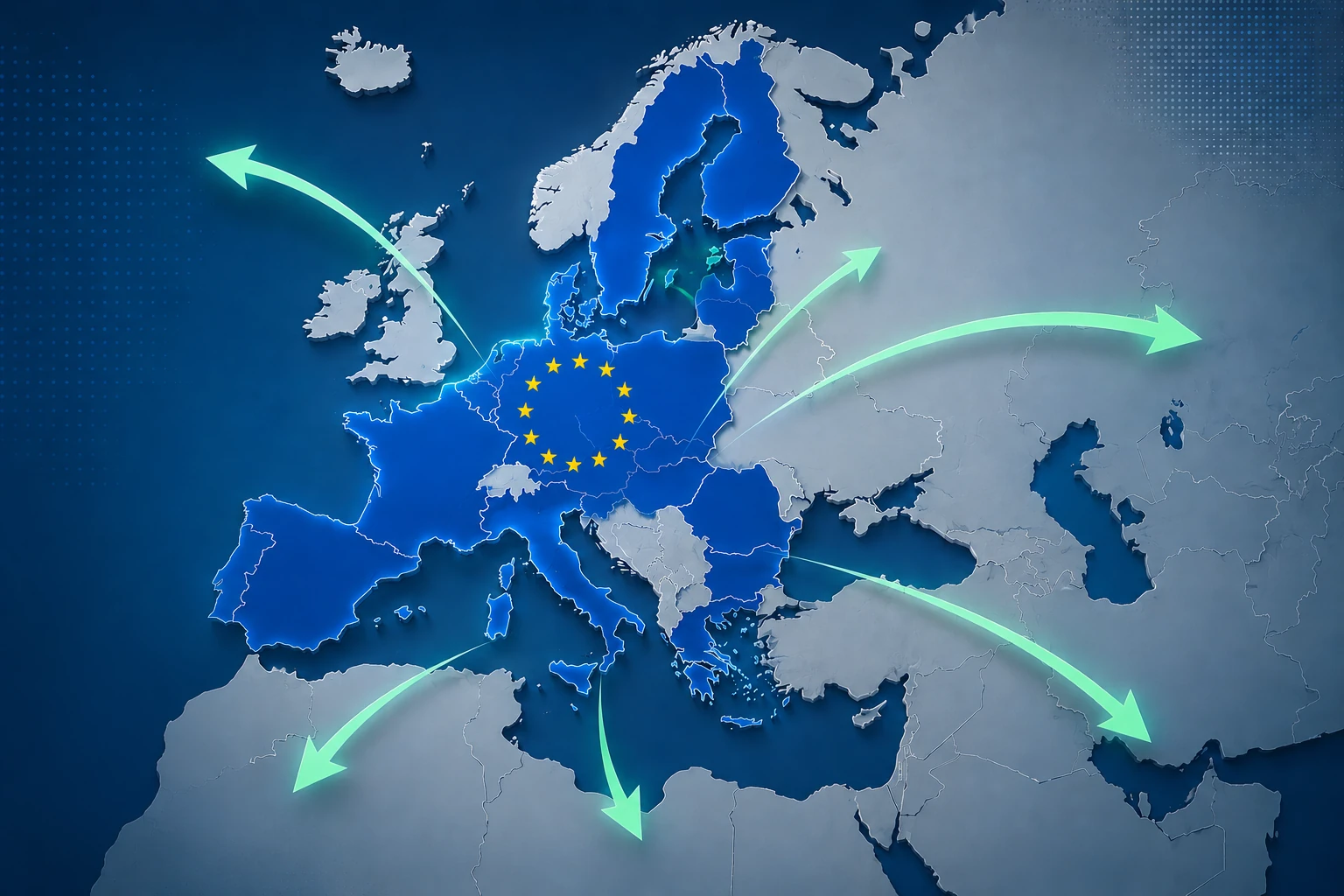
Export in DIWASS. Which non-OECD countries will be able to accept waste from the EU?
Exports within DIWASS will be one of the topics that companies in the waste industry should closely monitor in the coming months. The European Commission is working on a list of non-OECD countries that will be able to import certain types of waste from the European Union. For waste producers, this means an opportunity to reach new customers. In turn, carriers may gain access to new transport routes.
Contact us
FAILURE TO REGISTER WITH DIWASS IS ILLEGAL WASTE MOVEMENT! DON'T TAKE THE RISK!
Justyna Blazewicz-Seredyn
Ewelina Nadolna
New rules for exporting waste outside the EU
Regulation (EU) 2024/1157 amends the rules on the export of waste to non-OECD countries. Under the new provisions, interested countries must notify the European Commission of their wish to continue accepting waste from the EU. They must also demonstrate that they have the appropriate conditions for its recovery or disposal. Currently, the list includes the following countries:
Europe
Asia
Africa
North and Central America
The Commission is currently analysing the notifications received. It will then publish a full list of states authorised to import selected waste streams. The complete list is expected by November 2026. It is therefore worth following developments now.
New regulations are set to increase control over the international movement of waste. At the same time, they are to limit exports to countries that do not have adequate environmental infrastructure.
Dlaczego nowe rynki są ważne dla branży?
The new list may increase the number of potential recipients of secondary raw materials. In practice, this means greater freedom in searching for facilities interested in waste paper, plastics, or scrap metal.
Furthermore, some businesses may gain access to new markets. As a result, it will be easier to diversify sales directions and reduce dependence on individual customers.
Changes may also be of interest to carriers, brokers and freight forwarders. Each new export destination means potentially new orders. What's more, some companies will be able to develop specialisations in transport outside the European Union.
Export in DIWASS means greater transparency
The changes concerning waste exports are part of a wider reform of European regulations. In parallel, the European Union is implementing the DIWASS system. Its aim is to digitise processes related to waste movement.
As a result, businesses will have to pay increasing attention to the quality of documentation and the accuracy of data provided. At the same time, authorities will gain better access to information on waste being moved.
From May 2027, the export of certain waste to non-OECD countries not listed by the European Commission will, as a general rule, be prohibited. Therefore, producers, carriers, and brokers should monitor published information today. New regulations could not only restrict some export destinations but also create entirely new business opportunities.