
Most frequent questions about DIWASS – expert answers
The implementation of a digital document flow system for waste transport has triggered a wave of doubts among transport companies, organisers and recipients. Some questions are repeated in almost every conversation with entrepreneurs. Therefore, we have gathered them in one place – along with brief answers and links to detailed studies. The following questions about DIWASS cover registration, documents, inspections and sanctions.
Contact us
FAILURE TO REGISTER WITH DIWASS IS ILLEGAL WASTE MOVEMENT! DON'T TAKE THE RISK!
Justyna Blazewicz-Seredyn
Ewelina Nadolna
System basics
1. What exactly is DIWASS?
This is the European Commission's central platform for handling cross-border shipments of waste. Notifications, Annex VII documents, and correspondence with authorities are processed through it.
2. Since when has the system been mandatory?
The obligation to use DIWASS comes into effect on 21 May 2026. It arises from Regulations (EU) 2024/1157.
3. Which types of transport does DIWASS relate to?
The system covers movements between EU countries, exports, imports, and transit. However, domestic transport remains outside of it – it is primarily regulated by the BDO.
4. Does DIWASS replace BDO?
No. Both duties run in parallel, as they concern different spheres. BDO handles national records, and DIWASS handles cross-border documentation.
5. Does DIWASS also apply to entities outside the EU?
Yes. A foreign recipient or installation must be registered in the system if it operates within the Union. Without this, it is impossible to correctly complete the movement documents.
Registration in the system

6. How to register a company with DIWASS?
An EU Login account and authorisation to represent the company are required. In Poland, the application is approved by the Chief Inspectorate of Environmental Protection (GIOŚ) after data verification.
7. What number identifies the company?
The main identifier is the EORI number. Companies without an EORI number use their NIP number instead.
8. Who from the chain needs to have an account?
All participants: Manufacturer, organiser, carrier, recipient and processing installation. An unregistered entity blocks the entire procedure.
9. Can the counterparty be entered manually?
No. The system only allows you to select an entity from a list of registered ones. Therefore, verify partners' registration before signing the contract.
10. What is the cost of implementing DIWASS in a company?
Although the registration itself is free, the real cost lies in the organisation of processes and data, and complicated documentation often leads to delays. A more secure option is to use Help from professional advisors.
Annex VII and the transitional period

Does the paper Annex VII still apply?
Yes, but only until 31 December 2026 and subject to conditions. A new form template is required and agreement pursuant to Article 18.
Will the old form from Regulation 1013/2006 pass inspection?
No. The old pattern is no longer accepted, not even during the transitional period. The new one is available by pressing the button below:
13. Does Annex VII need to be sent to the Chief Inspectorate of Environmental Protection?
No, there is no such requirement during the transition period. However, the document must accompany the transport.
14. When to choose Annex VII, and when a notification?
Annex VII concerns green-list waste intended for recovery. Other cases require full notification.
Notifications
15. What is the notification procedure in DIWASS?
The applicant submits the application document and the electronic transmission document. Subsequently, the competent authorities of the participating countries issue decisions in the system. The entire process is described in the guide: Step-by-step notification.
16. What about applications submitted before 21 May 2026?
Applications with acknowledgment of receipt are processed under the old rules. The others, however, have been closed and require a new procedure in DIWASS.
17. Do old permits remain valid?
Yes, for the period for which it was issued. However, it is worth following the GIOŚ communications on transitional provisions, because the deadlines differ depending on the type of permit.
Driver checks and responsibilities
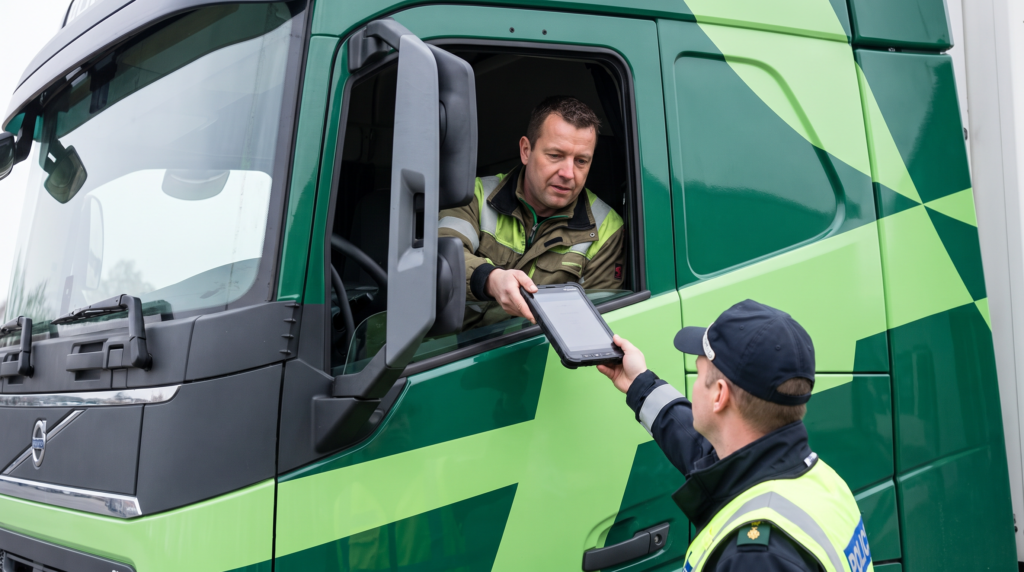
18. Who can stop the transport of waste?
Access to the system In Poland, they have the Provincial Inspectorate for Environmental Protection, the Road Transport Inspection, the Border Guard, the National Revenue Administration, and the Police.
19. What must a driver show during a check?
Electronic transport documents – on a tablet, phone, or as a printout in case of emergency.
20. What to do if there is no signal during a check?
The driver should have a complete set of documents available offline. The company's emergency procedure is the basis of due diligence here.
21. Does the carrier require additional national authorisations?
Yes – the entry into the BDO and the relevant permits operate independently of DIWASS. The requirements are being compiled in a study: Legal requirements for waste carriers.
22. And what about the requirements in other countries, In Germany?
Member states maintain their own transport permits, which must be consulted separately. To learn about the regulations in Germany Click here.
Responsibility and sanctions
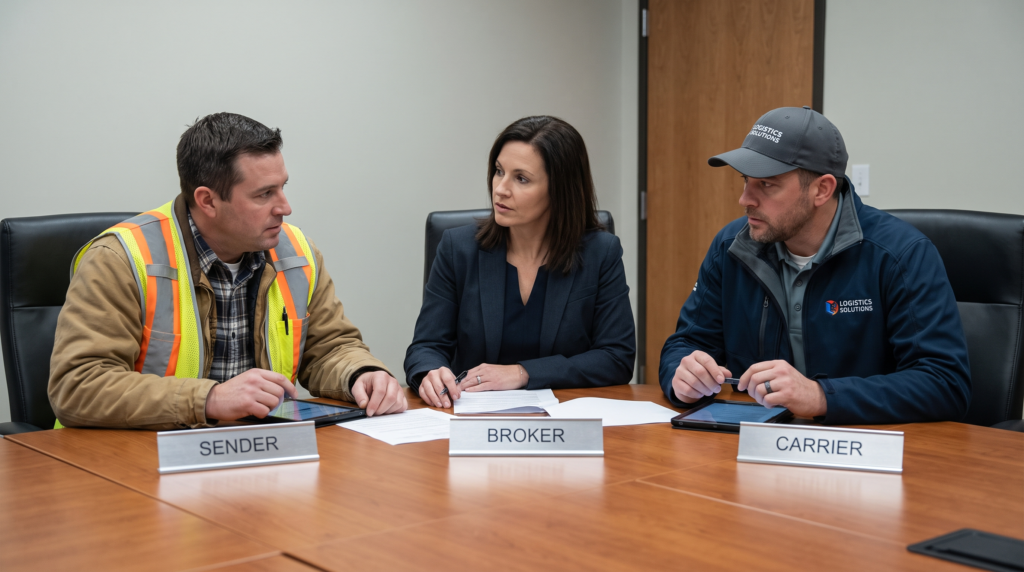
23. Who is responsible for data errors?
The regulation assigns responsibilities according to roles, not according to who operates the system. Therefore, assigning operations to a broker does not relieve the organiser of responsibility.
24. What are the penalties for infringements?
A carrier without the required document risks a fine of PLN 10,000 today. However, the draft Polish act provides for a range dependent on the entity's role. For the transporter, it's from PLN 10,000 to PLN 100,000. For illegal relocation, the fines reach PLN 1 million.
25. Can a formal error mean an illegal movement?
Yes. An incorrect waste code or deficiencies in Annex VII could lead to that classification by the authorities.
26. How to prepare freight forwarding for new regulations?
Please remember that any changes to the data concerning a specific shipment will be visible to other participants in the operation. Therefore, organise your data, roles and agreements before the first movement. You can find out more about this in the publication. DIWASS through the eyes of a freight forwarder.
Export and other systems
27. Does DIWASS cover exports outside the EU?
Yes, and under a tightened regime. From 21 November 2026 to 21 May 2029, there is a ban on exporting B3011 waste to non-OECD countries. Furthermore, from 21 May 2027, the export of non-hazardous waste outside the OECD will require the fulfilment of additional conditions. The destination country must appear on a list drawn up by the Commission, and the facility must undergo an audit by an independent third party.
28. Does DIWASS have anything in common with SENT?
These are separate systems, but the logic of operation is similar. Experiences with SENT help to understand the new regime: SENT Notification – Obligations and Penalties.
29. What about a system failure before loading?
Transport should not proceed without effective notification. Therefore, document the unavailability, check the GIOŚ messages, and reschedule the loading. Furthermore, verify the emergency procedures from Implementing Regulation (EU) 2025/1290. The mere cause of the breakdown may, at best, be a mitigating circumstance.
The questions end, the duties remain
The list above shows a clear pattern: most doubts concern not the technology itself, but the division of roles and documents. Therefore, the best answer to questions about DIWASS is an organised process – verified contractors, up-to-date templates, and practiced procedures. Companies that build this will stop asking questions. Instead, they will start answering inspectors without hesitation.
Author Jakub Koszyński | Editorial team: Paweł Makowski