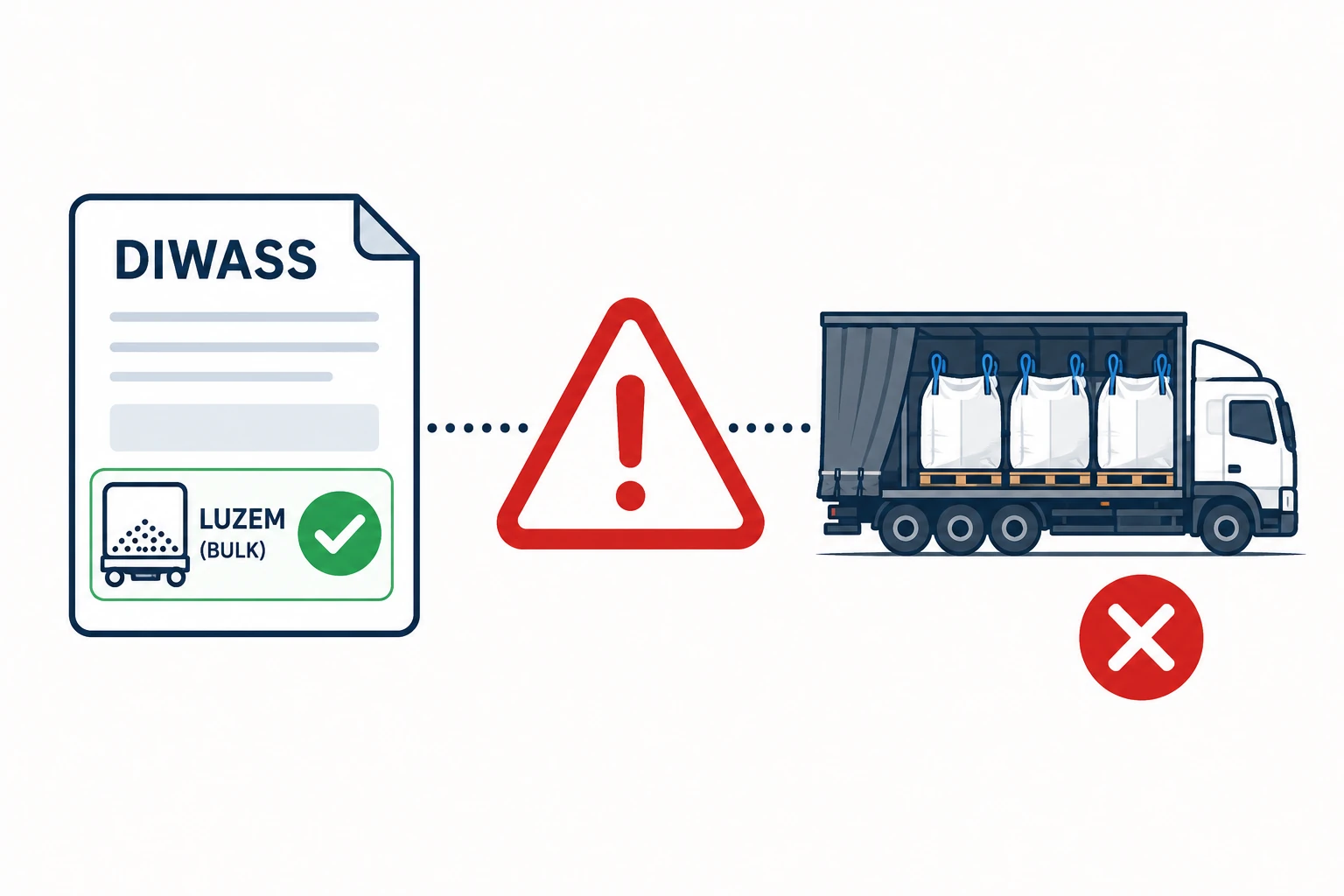
Type of packaging in DIWASS. A small detail that could halt transport
When preparing transport documentation, most companies focus on the waste code, the recipient, and the cargo weight. Meanwhile, problems can arise much earlier. The packaging type in DIWASS is not just technical information. If the method of waste transport does not comply with the documentation, the carrier may face questions during a road inspection. Therefore, it is worth verifying this data even before loading begins.
Contact us
FAILURE TO REGISTER WITH DIWASS IS ILLEGAL WASTE MOVEMENT! DON'T TAKE THE RISK!
Justyna Blazewicz-Seredyn
Ewelina Nadolna
The documentation must reflect reality
In the DIWASS system and the paper Annex VII, transport participants determine the method of waste carriage. The documentation should reflect the actual transport conditions.
In practice, this means indicating whether waste is transported in bulk, in big bags, containers, drums, or other packaging used during transport.
At first glance, it might seem insignificant. However, it is precisely such details that often determine whether the documentation matches the factual situation.
The problem might arise during loading.
Let's assume the documentation specifies the transport of bulk waste in a walking floor trailer. However, on the day of loading, it turns out that the waste has been prepared in big bags and is to be transported on a standard curtain-sided trailer.
The waste code remains the same. The collection point and the recipient also do not change. However, the method of transport, which was previously indicated in the documentation, does change.
Therefore, it is worth making sure that the data entered into DIWASS corresponds to what will actually be found on the vehicle.
It's worth checking this before you go.
The packaging type in DIWASS may seem like a minor element of the entire procedure. In practice, however, it forms part of the documentation describing the transport.
For this reason, it is worth verifying the preparation of waste before loading begins. A few minutes spent checking documents can help avoid later explanations, corrections, or unnecessary delays during transport.